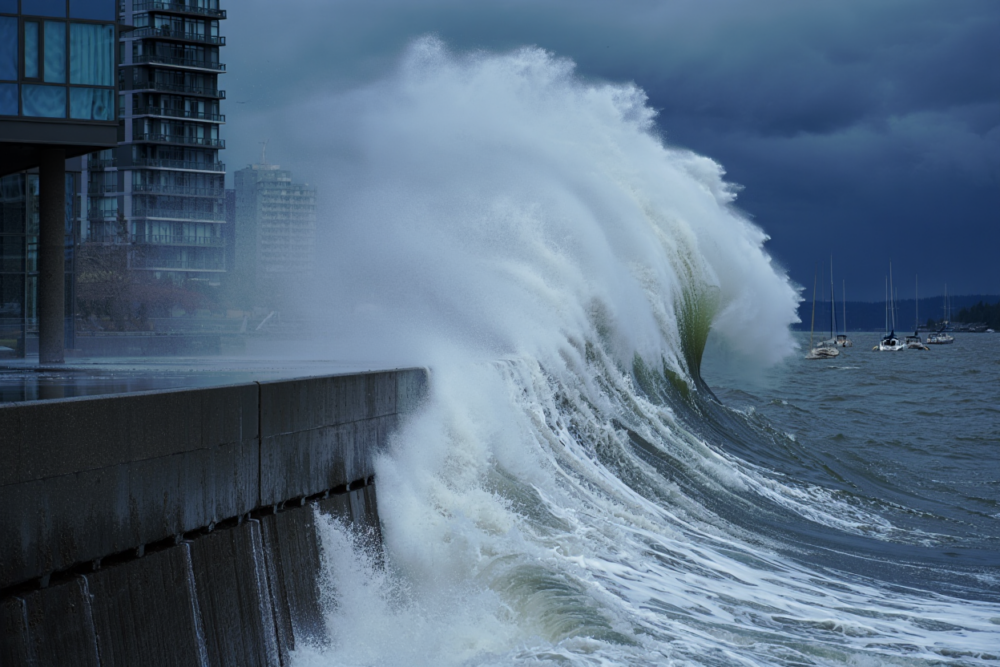
Yes, Millsboro, Delaware floods because when it comes to natural disasters, the state of Delaware gets hit by hurricanes, tropical storms, and nor’easters the most. Aside from these, another top hazard that the state has to prepare for is coastal flooding.
Delaware is the lowest-lying state in the country, with a mean elevation of 60 feet (below 20 meters). In addition, the land in the First State is also “naturally sinking.” As a result, the state is more susceptible to flooding compared with other states, and it also has an increased risk from sea level rise.
This flood risk, of course, extends to Millsboro, a town in Sussex County, Delaware.
Millsboro Delaware Flood Risk
According to First Street, a leading physical climate risk data provider, Millsboro has “moderate” risk from flooding. The organization estimates that 776 properties are at risk of flooding in the next 30 years. This represents nearly a quarter (24.6%) of the properties in the town.
The report also mentions that Millsboro has a 26% chance of a 1-in-100-year flood event to occur at least once over the life of a 30-year mortgage. If this massive flood were to happen today, around 300 properties in the town would be affected. Thirty years from now, an event of the same likelihood would impact 347 properties.
There are four possible flood sources in Millsboro: high tides, heavy rain, rivers or creeks, and storm surge.
| High tides | Water coming up from the Indian River or local creeks during normal high tides |
| Heavy rain | Pluvial flooding due to a massive rainstorm that overwhelms the town’s drains |
| Rivers or creeks | Fluvial flooding due to local bodies of water overflowing their banks after days of rain |
| Storm surge | The “wall of water” pushed into town by a hurricane or a major nor’easter |
Why Millsboro Delaware is at Risk
This former milling community in south-central Sussex County is a beautiful place to live in, but its unique location makes it particularly vulnerable to water. While Millsboro is located around 20 miles inland, it sits at the headwaters of the Indian River, which directly connects it to the Atlantic Ocean to the east via the Inland Bays, in particular, the Indian River Bay. In addition, Millsboro is surrounded by other bodies of water, including Betts Pond, Millsboro Pond, and Iron Branch.
- Proximity to Coastal Areas
While the town’s proximity to coastal areas make it easy for residents to enjoy fishing, boating, birdwatching, kayaking, and beachgoing, it also means that Millsboro is vulnerable to rising tides and storm surges. Significant flooding ensues from intense storms and hurricanes that hit the area. These natural events can cause water levels to rise quickly in low-lying areas.
- Low Elevation
This Delaware town has a low elevation and a generally flat landscape characteristic of the coastal plain, which makes it prone to tidal surge, high tide flooding, and pluvial flooding.
According to Climate Central’s Surging Seas Risk Finder, Millsboro has a very high risk (93%) chance of at least one flood over 5 feet between now and 2050. That is, a 5-foot flood event is almost certain to happen in the next 25 years. While only a few people (29 as of this writing) live on land lower than 5 feet, homes and roads leading to them are in danger of significant flooding.
- Sinking Land
According to the Delaware Department of Natural Resources and Environmental Control (DNREC), the state is experiencing a “naturally driven sinking of the land.” That is, the tectonic plate on which the state sits on is sinking.
With Millsboro already having a low-lying geography, further land subsidence (sinking) will only make the town vulnerable to flooding, especially those caused by rising sea levels.
- Rising Seas
Over the past century, sea levels in Delaware have risen by more than a foot. In the next century, this will only increase. The DNREC estimates that sea levels in the state could rise by 0.5 meter to 1.5 meters in the next century.
- Compound Flooding
Millsboro is vulnerable to compound flooding, which occurs when more than one thing causes inundation. This type of flooding can occur when, for instance, a heavy rainstorm meets a high tide or when a storm surge from the ocean prevents river water from flowing out to the sea.
Millsboro’s Flooding History
Taking a look back at the town’s history shows how it has been affected by floods.
One of the most unforgettable events occurred in 1962 when, as older residents may remember, a massive nor’easter battered the coast for three days. Known as the Ash Wednesday Storm of 1962, the storm pushed water deep into back-bay areas.
A storm surge reached as high as 2.9 meters (9.5 feet) above mean sea level. A case study recounts:
“As the water continued to rise and waves reached further across the barriers and beaches, dune systems began to fail and ocean waters began to meet waters of the Inland Bays along almost every stretch of Delaware’s barrier islands. … Even towns off the coast, such as Milton and Millsboro experienced extreme flooding due to the rising of tidally influenced tributaries.”
What the Town is Doing
Millsboro is a town defined by its relationship with the water. It enjoys the resources that come with this, but it isn’t sitting still when it comes to dealing with flood events. In particular, the Town Council has recently updated its laws to help protect residents:
- Strict building rules: Updates to Chapter 109 of its Town Code require all new construction in flood-prone areas to follow tough safety standards.
- Smarter zoning: New rules passed in late 2024 (Chapter 210) limit how much “hard surface” can be on a property and strictly prohibit blocking drainage paths with landscaping or debris.
- Restoring the river: A major dredging project is underway to clear out the Indian River. The sediment removed will be used to rebuild 15 acres of tidal wetlands. This natural “buffer” will soak up storm surges before they reach homes.
The community understands the risk of living by or near the water, and it is taking proactive steps to ensure that Millsboro remains a safe and vibrant place to live for generations to come.