When my ex-husband and I first got married, our then-six-year-old furry companions (Josi and Roxy) were finally able to live with both of us full time in one place. They were both very happy to live with us at our first marital home. However, we were only there for a little over a year as we were renting while we searched for our first home to buy.
Although both girls were well-behaved and had gone through dog obedience training as puppies, moving to our new home really shook them up emotionally, and they started acting erratically as if they had been living in the wild all these years.
It was weird too because they had lived in four different locations up to that point, where they either had free rein while we were not home, were crated, or were relegated to one room.
For example, at our rental home, while we were at work all day, we left the girls in the main floor laundry room with the door shut. They were happy there, didn’t go potty, and didn’t chew or wreck anything. All went well until we moved.
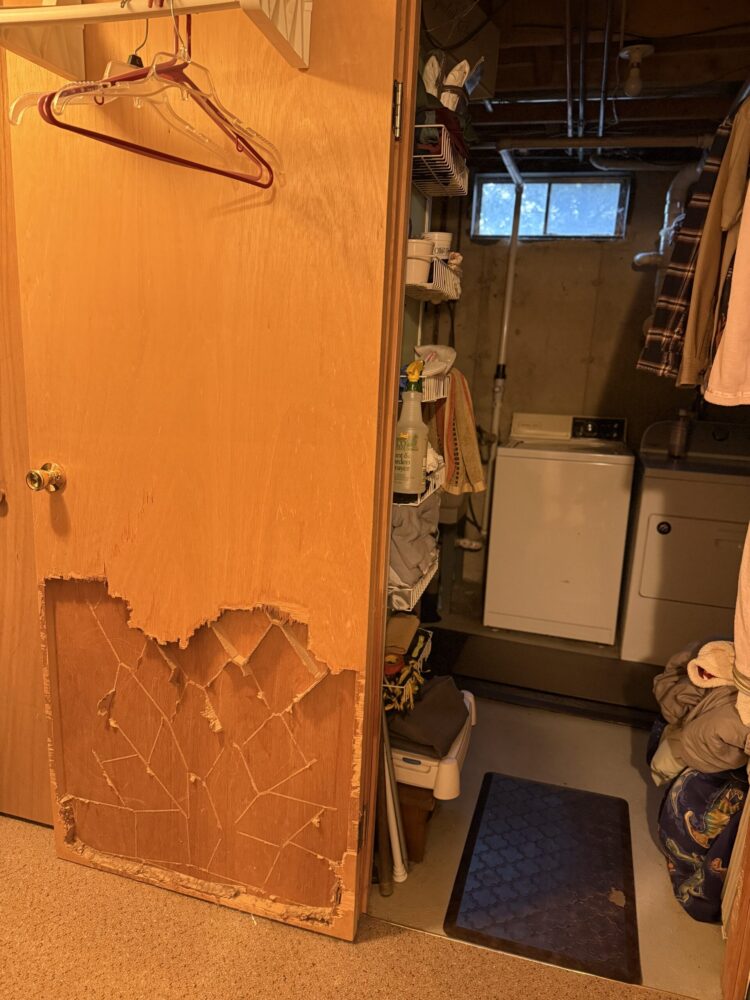
At our new home, we thought we’d use the laundry room method since it had worked before. Unfortunately, I came home to Josi’s bloody paws and a half-torn-apart laundry room door she tried to escape through unsuccessfully. That door is still torn up to this day, as pictured above!
Then, we tried the crate trick. We bought each of them their own crate, made it their “home” with soft doggie beds, bones to chew on, and plenty of light to see out into the yard, as the crates were in our sunroom with a great view. Again, I came home to Josi having bloody paws and bent metal bars on the crate!
We ended up just letting them have free rein in the house. My close friend was kind enough to come let them out a couple of times each day while we were at work, and that seemed to calm their nerves.
According to the Australian Cattle Dog Rescue Association, “Whether a dog was recently adopted or has been part of the family for years, relocation means unfamiliar smells, strange sounds, and a disruption to everything they know as safe.
Reinforcing progress with stability, routine, and encouragement helps dogs build long-term confidence and security in their environment.
When to Worry: Signs Your Dog May Be Struggling
Not every adjustment goes smoothly, and some dogs need extra support. If your dog continues to display signs of chronic stress—such as lack of appetite, aggression, withdrawal, or destructive behavior—after several weeks, it may signal deeper issues that need intervention.
Monitor for:
- Repetitive pacing or circling
- Excessive panting or drooling without physical exertion
- Avoiding eye contact or hiding frequently
- Sudden changes in mood or reactivity
Reach out to your veterinarian to rule out health conditions, then consult a behaviorist with experience in rescue dog transitions,”.
Thankfully, I still live in this house today, so none of my furry family members have had to go through the pains of moving!
*Note: All content within this article is meant for informational purposes only and is in no way a replacement for professional medical or psychological advice or support. Seek immediate and appropriate care from a veterinarian or healthcare professional should you or a trusted loved one deem it necessary for your animal.
People who live in the same home long-term
I don’t know whether my desire to live in one place long-term comes from being raised in the same townhome for seventeen years, from first grade through high school graduation and beyond, fear of my dogs having a traumatic experience, or from being naturally a creature of habit. Either way, I have been in this home for more than twenty-four years!
Here are some of the top reasons why I have stayed in the same home for over two decades:
- I have loved and cared for four generations of eight furry canine family members here:
- Josi
- Roxy
- Luke
- Clio
- Phoebe
- Otis
- Lucy
- Mila
- My two sons were conceived and are growing up in this home
- My mom, who passed away suddenly at 58, spent a lot of time here with my sons and I
- I fought for this home in a brutal divorce
- I am too lazy to move (ha, ha)
- The trees I planted are maturing nicely and have created a peaceful haven in my backyard
- The view of my private lake is amazing
- Sidewalks are finally being put in to create a walkable community!
- I love my home – I feel safe and at peace here
- And honestly, I cannot afford to buy another home and start over at 53!
Don’t get me wrong – I like to change things up quite a bit in my home; furniture, design, paint, flow, etc., but I love my home and do not imagine I will ever move from here until I am too old to manage the care of it.
I am a GenXer who dreams of aging in place with a pack of dogs to boot!
Average length of time people live in a house USA
In looking at my own experience, I can say that my average of seven years per home is based on the following stats:
- Garden City: Six months
- Detroit: Two years and six months
- Wayne: Four years
- Canton: Seventeen years
- Plymouth: Five years
- Commerce Township: One year and six months
- Current location: Twenty-four years
Even though my math is correct, the seven-year average doesn’t seem right. The short stays in Detroit, Garden City, and Commerce hurt my average. Let’s see what happens if I removed them. Well, that seems more like me. My average bumps up to thirteen years, which is in line with the national average for most folks.
Consumer Affairs reports that, “The average length of U.S. home ownership in 2024 is 11.9 years. While this number is nearly double the length of homeownership recorded in 2006 (6.5 years), homeownership has actually been on the decline since 2020,”.
Signs your dog is stressed from moving
In conclusion, moving can unsettle even well-adjusted dogs. Watch for behavioral changes, maintain familiar routines, offer patience and reassurance, and seek professional guidance when stress persists. With steady support, your dog can feel secure again.